
Church calendar
SUpport us
(Sing ye the Lord a new refrain) for vocal ensemble, oboe I+II, taille, theorbo, strings and basso continuo
(Sing ye the Lord a new refrain) for vocal ensemble, oboe I+II, taille, theorbo, strings and basso continuo
Soprano
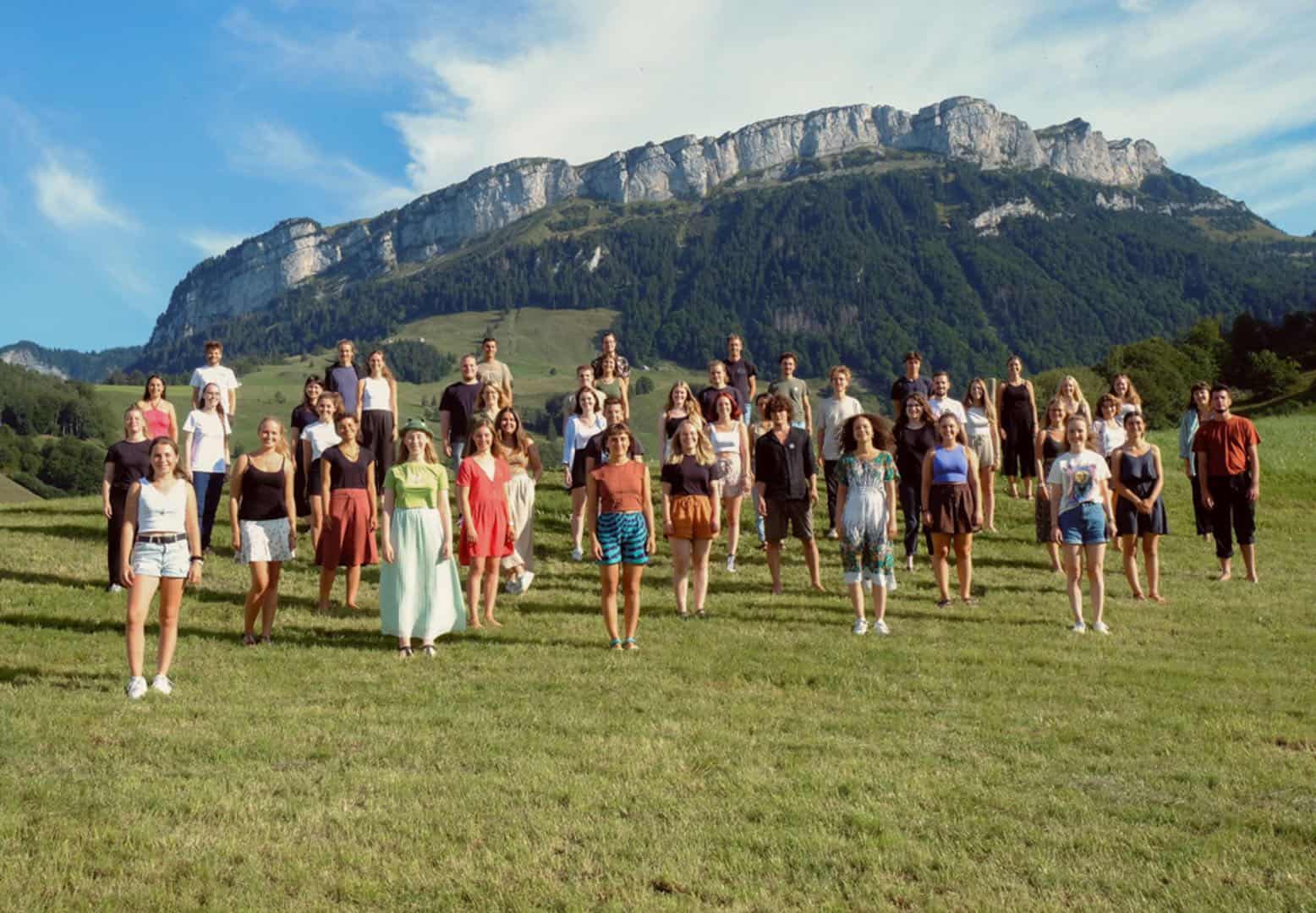
Lia Andres, Cornelia Fahrion, Delia Haag, Katharina Held, Stephanie Pfeffer, Simone Schwark, Mirjam Striegel
Alto
Antonia Frey, Nanora Büttiker, Katharina Guglhör, Laura Kull, Simon Savoy, Lea Scherer, Jan Thomer, Sarah Widmer
Tenor
Clemens Flämig, Zacharie Fogal, Achim Glatz, Klemens Mölkner, Joël Morand, Sören Richter
Bass
Fabrice Hayoz, Serafin Heusser, Christian Kotsis, Julian Redlin, Peter Strömberg, Tobias Wicky
Conductor
Rudolf Lutz
Violin
Renate Steinmann, Monika Baer
Viola
Susanna Hefti
Violoncello
Hristo Kouzmanov
Violone
Shuko Sugama
Oboe
Clara Espinosa Encinas, Elena Branno
Bassoon
Gilat Rotkop
Taille
Amy Power
Theorbo
Elias Conrad
Organ
Nicola Cumer
Participants
Rudolf Lutz, Pfr. Niklaus Peter
Speaker
Hartmut Rosa
Recording date
14/11/2025
Recording location
Trogen AR (Switzerland) // Evang. Kirche
Sound engineer
Stefan Ritzenthaler
Producer
Meinrad Keel
Executive producer
Johannes Widmer
Production
GALLUS MEDIA AG, Schweiz
Producer
J.S. Bach-Stiftung, St. Gallen, Schweiz
Period of composition
around 1726–1727
Text
Movement 1: Psalm 149:1–3; movement 2: “”Nun lob, mein Seel, den Herren”” by Johann Gramann (composed around 1530; first printed in 1540, based on Psalm 103), verse 3, in conjunction with the poem “”Gott, nimm dich ferner unser an”” (author unknown); movement 3: Psalm 150:2 and 6
1. Chor
Singet dem Herrn ein neues Lied, die Gemeine der Heiligen sollen ihn loben. Israel freue sich des, der ihn gemacht hat. Die Kinder Zion sei’n fröhlich über ihrem Könige, sie sollen loben seinen Namen im Reihen; mit Pauken und mit Harfen sollen sie ihm spielen.
2. Arie und Choral
Wie sich ein Vater erbarmet
Gott, nimm dich ferner unser an,
Über seine junge Kinderlein,
So tut der Herr uns allen,
So wir ihn kindlich fürchten rein.
Er kennt das arm Gemächte,
Gott weiß, wir sind nur Staub,
Denn ohne dich ist nichts getan
Mit allen unsern Sachen.
Gleichwie das Gras vom Rechen,
Ein Blum und fallend Laub.
Der Wind nur drüber wehet,
So ist es nicht mehr da,
Drum sei du unser Schirm und Licht,
Und trügt uns unsre Hoffnung nicht,
So wirst du’s ferner machen.
Also der Mensch vergehet,
Sein End, das ist ihm nah.
Wohl dem, der sich nur steif und fest
Auf dich und deine Huld verläßt.
3. Chor
Lobet den Herrn in seinen Taten, lobet ihn in seiner großen Herrlichkeit! Alles, was Odem hat, lobe den Herrn. Halleluja!

All libretti sourced from Neue Bach-Ausgabe. Johann Sebastian Bach. Neue Ausgabe sämtlicher Werke, published by the Johann-Sebastian-Bach-Institut Göttingen and the Bach-Archiv Leipzig, Series I (Cantatas), vol. 1–41, Kassel and Leipzig, 1954–2000.
All in-depth analyses by Anselm Hartinger (English translations/editing by Alice Noger-Gradon/Mary Carozza) based on the following sources: Hans-Joachim Schulze, Die Bach-Kantaten. Einführungen zu sämtlichen Kantaten Johann Sebastian Bachs, Leipzig, 2nd edition, 2007; Alfred Dürr, Johann Sebastian Bach. Die Kantaten, Kassel, 9th edition, 2009, and Martin Petzoldt, Bach-Kommentar. Die geistlichen Kantaten, Stuttgart, vol. 1, 2nd edition, 2005 and vol. 2, 1st edition, 2007.
Alle Kantatentexte stammen aus «Neue Bach-Ausgabe. Johann Sebastian Bach. Neue Ausgabe sämtlicher Werke», herausgegeben vom Johann-Sebastian-Bach-Institut Göttingen und vom Bach-Archiv Leipzig, Serie I (Kantaten), Bd. 1–41, Kassel und Leipzig, 1954–2000.
Alle einführenden Texte zu den Werken, die Texte «Vertiefte Auseinandersetzung mit dem Werk» sowie die «musikalisch-theologische Anmerkungen» wurden von Anselm Hartinger und Pfr. Niklaus Peter sowie Pfr. Karl Graf verfasst unter Bezug auf die Referenzwerke: Hans-Joachim Schulze, «Die Bach-Kantaten. Einführungen zu sämtlichen Kantaten Johann Sebastian Bachs», Leipzig, 2. Aufl. 2007; Alfred Dürr, «Johann Sebastian Bach. Die Kantaten», Kassel, 9. Aufl. 2009, und Martin Petzoldt, «Bach-Kommentar. Die geistlichen Kantaten», Stuttgart, Bd. 1, 2. Aufl. 2005 und Bd. 2, 1. Aufl. 2007.
This text has been translated with DeepL (www.deepl.com).
Hartmut Rosa
As soon as the first note sounds, the room begins to breathe and come alive. It is like a shudder, like floating, as if a spell has taken hold of us. I don’t know if you felt the same way: that something changes when music suddenly fills the room, and even more so when music like this fills the room. This experience of something transforming can be felt almost physically and also understood physically.
The room begins to breathe and come alive. Breath and life are central metaphors for us – in my own theory, they are metaphors for our relationship with the world. We have to breathe, we breathe in the world continuously and we breathe it out. And when our relationship with the world becomes difficult, when we are caught in the rat race or approach the world in a state of aggression, we often say “his breath caught in his throat” or “she found it difficult to breathe”.
When music moves us, perhaps when we least expect it or when it is as beautiful as what we have just heard, we sense that something is changing in our relationship to the world, in the sense that there is a sudden shift in the way we relate to life and the world. Even in the Renaissance, there was the idea that music fluidises our relationship to the world.
My colleague Lambert Wiesing, a philosopher from Jena, distinguishes between a linear relationship to the world, and as a sociologist, I would say that we are mostly trapped in it. The world is harsh towards us, full of problems and tasks, difficulties and resistance. Then it can happen that we come to a church in Trogen and are moved by such music. And then, as Lambert Wiesing might say, a linear relationship to the world gives way to a picturesque relationship to the world. Suddenly, the lines are no longer hard, no longer stone, so to speak, but seem to become fluid. Music allows us to sense and feel that we can be placed in the world and relate to the world in a different way.
What then emerges is something like a breath. The breath is not only in the room, it is also within us. When we allow ourselves to be moved, touched and transformed by music, we really notice that we breathe differently. One could even say that it breathes within us. Then we don’t know exactly who the actor is. Am I acting when I listen to music?
Listening to music is something super interesting. It is grammatically active. I listen. But actually, I am the victim – I am passive. Something happens to me. I can’t say exactly what it is anymore. Something in me and between the world is changing. One could also put it more harshly in sociological terms – which will please my students – with Karl Marx: We must “force the petrified conditions to dance”.
Music has the power to make this tangible, first in our experience, in the way we relate to the world and life. And Johann Sebastian Bach knows this, of course, there is no question about it. As soon as the first note sounds, the room begins to breathe and come alive. This is not necessarily high culture, this is Reinhard Mey. What a gift a song is! One could, of course, say what a gift such a motet is. Because it is not only Reinhard Mey who knows this experience, that music touches and transforms us in this way, but Johann Sebastian Bach even more so.
Sing, sing. We heard that earlier in the introduction. It’s amazing that Bach also does this for a long time on one syllable, so to speak. I’ve learned that this is called melisma. Even on one letter across different notes, this singing also comes alive as an experienced relationship with the world. Because singing has this ability to bring us into resonance. The choir knows this for sure, and so do the musicians.
But we as listeners know it too. I found it fascinating earlier in the introduction when there was talk of the second movement, where the choirs encounter each other. Clemens, I can’t remember his surname now, Clemens said that it’s impossible without listening. It is listening singing, he said. And I believe that when we allow ourselves to be moved as listeners, it is also singing listening. We begin to sing along, so to speak, and an interrelationship develops. In singing, a resonance relationship develops along many axes. I don’t want to unfold the entire theory of resonance now, I can’t do that in a quarter of an hour, I’ve written 900 pages about it, if you’re interested.
But the basic form is this: something touches us, and something within us responds to it. Something within us begins to breathe and live. And this transforms the way I relate to this world, to this life and also to myself. These are the basic elements of a resonance relationship. Something touches me, something reaches me.
That’s how it is in singing, at least the listening part. And the jubilant or sometimes lamenting part of the orchestra. Something affects me, touches me. And something in me responds. I call this a responsive relationship or emotion, which literally means emovere. Something falls into me, affecting me, emovere. Something moves out. An interrelationship arises in which things are transformed, in which something in me is transformed and something in my perception of the world is transformed. So singing listening and listening singing.
Of course, I didn’t know this motet very well. In fact, I hardly knew it at all. But I thought it was great to accept this commission; I think this Bach project here is really wonderful. And of course I know a lot of Bach’s work and enjoy playing the simpler pieces on the organ, even if I’m not very good at it. “Jesus bleibet meine Freude” (Jesus remains my joy), for example. I’ve often wondered about that. I can play it for an eternity, even for hours on end. When I finish at the end, I want to start again at the beginning.
And that’s why I came up with the idea that Bach is the only happiness drug whose happiness factor never wears off, so to speak. So I threw myself into this motet with joy and asked myself where it actually came from. What do you do? You turn to Google. And then I thought, aha, I knew the hymn, but I didn’t know the motet so well. So I googled it. Psalm 98, “Sing unto the Lord a new song”. But it goes on, “for he hath done marvellous things”. And then I asked myself, why did Bach leave out the marvellous things? It’s a bit strange.
Then I searched further and found out what we heard earlier, which is probably not Psalm 98, but 149:1. It also begins with “Sing unto the Lord a new song”. And it fits much better lyrically. But there is something else that stands out, namely that it begins with Hallelujah.
Then I thought, strange, either he left out the miracle or the Hallelujah. How could Bach do that? But actually, I want to tell you that he left out neither the miracle nor the Hallelujah, but that he brings it to our attention.
And how does he do that? First of all, of course, by emphasising the singing, so to speak. By letting the choir sing naturally and letting us sing along as we listen. And singing connects all the axes of resonance. Especially when you do it the way Bach does. What are the axes of resonance? First, with other people. A choir cannot sing, an orchestra cannot play, and choir and orchestra certainly cannot perform together unless a fine resonance develops between those who make music and those who sing.
That is the listening part. When you play, when you make music, you have to be constantly listening. Sociologically, I call this a “mediopassive relationship to the world”. You are completely passive, you are completely listening, you become, in a sense, an ear. As we heard earlier from Mozart, his soul was completely in his ear, he was completely listening.
But at the same time, you are also singing when you sing in a choir or even when you listen while singing. This means that we are active, we enter into a relationship of resonance with the others who are making music here. This also creates a subtle interaction – as anyone who makes music or even just listens to music knows – with the space, with the material space, with the building, with the stone, with the wood, with this beautiful church. This creates a felt physical resonance, also with our bodies, by the way.
I call this the material axis of resonance. The one between people is the horizontal or social axis. And then, of course, a vertical resonance relationship arises, in this case through the text alone – but I will show you in a moment why it goes beyond that. Vertical means that we feel addressed at the deepest level of our existence.
While I usually only act partially – I have to buy, I have to work, I have to get things done, I have to fill out my tax return – I am never really meant as a person in the deepest depths of my soul. But music, and of course the psalms or the Bible, ask: What is the basis of your existence? What is your fundamental relationship to the universe, to the world, to the cosmos?
Whatever you call it, I call it the vertical axis of resonance that is set in motion there. Not only through reflection. I believe that it is not the theoretical content of the text that brings us into resonance, but rather this fluid relationship with the world, this invocation of the last things, of the Father who watches over us, but also of the flower that is trampled or falls. Last Sunday in St. Blasien Cathedral, there was this large Gaia hanging, as it used to hang in the Frauenkirche, and it fits beautifully into this cathedral space. Brahms’ German Requiem was being performed there, and I thought to myself that the text is almost identical, or at least that’s how I remembered it, because all flesh is like grass. Obviously, I wasn’t the first to notice this; we’ve heard it before. I’ll come back to this in a moment.
But I think that here we come into resonance with the question of what is the reason for my existence. One could say, what is the meaning of my existence. But for me it is not just a question of cognitive meaning, but of how I stand in this world and in relation to this world. And I find this second sentence extremely interesting because it gives us both.
Sociologically, I call this the oasis experience and the desert experience. The desert experience seems obvious in this regard, because all flesh is like grass, or as it says here, “God knows we are but dust, (…) Like grass from a rake, a flower and falling leaves. The wind blows over it, and it is no longer there.”
We are actually nothing. We are precariously placed in a dangerous world, and nothing will remain of us. I call this experience a desert experience, and I believe we all have it. And by the way, I also think it’s great that we don’t know exactly (that’s how I perceive it now): is it actually a New Year’s motet that celebrates the possibility of something new, which I would see in the resonance, by the way. Because in this interrelationship, in this liquefaction of the world’s relationship, lies the moment when something new can be born.
That is why I believe that it is not just a remedy, a painkiller, that we listen to the motet and then carry on as before; unfortunately, that is not unlikely. But perhaps we are also experiencing here that another way of being in the world, of relating to the world, is possible. This oasis experience connects here – oasis experience means that there is someone who hears us and sees us, who has called us by name, who has breathed the breath of life into us. This comes across in this image of the Father – just as a father cares for his youngest children – I don’t remember exactly what it’s called, but you know it, you’ve heard it.
It is a very powerful image. There is someone who has called you by name, who watches over you. And I believe it is not about theory, and it is not even so much about whether I believe it or not. It is about this experience. I was not raised Christian, but rather Hindu, which I also find interesting, but I have always wondered about this because I like to connect it with John 1:1, “In the beginning was the Word”. I believe it must be: In the beginning was the call, and then it is the same as what the Hindus say, “the universe is sound”, in the beginning, what calls us sings, so to speak.
But now back to the Father. I wondered why the Aaronic blessing always touched me so deeply. I would say that is what really made me a Christian on at least one level. “The Lord bless you and keep you. The Lord make his face shine upon you and be gracious to you. The Lord lift up his countenance upon you and give you peace.”
I always thought that as a sociologist I couldn’t say anything about it. I don’t know what it means to me in theoretical terms, but I know what kind of relationship it creates, what kind of experience, what kind of living form of being connected to the origin of the world. And then someone once told me that it might have something to do with our childhood experience: the mother or father – in this case it is the father, but it could just as easily be the mother, and it doesn’t really matter – leaning over the cradle and giving us the feeling that there is someone who sees us and holds us and carries us in our primordial ground, who leans over us and gives us warmth and nourishment and connection. That is a primal human experience.
And music, says Sloterdijk, for example, music can remind us of this experience because the voice “sings,” he says, “and hears.” The voice we hear – there are now good reasons in child development psychology to believe that even as embryos we are probably able to recognise the voice of our mother or father, someone who addresses us. And Sloterdijk writes that this vibration in the greeting is what makes us subjects in the first place. This is the first form of relationship with the world. Someone calls me, and I go to meet them.
This oasis experience comes alive in this motet and contrasts it with the desert experience. We are only “ash and bone”. Incidentally, this also reminded me strongly of Gryphius, probably because the connection is Psalm 103, where this is expressed. Gryphius says: “What one builds today, another tears down tomorrow”. And further: what are we other than “shadows, dust and wind, than a meadow flower that cannot be found again”. That is actually the opposite experience, and one could expand on it at length.
I haven’t looked at my watch, but I really want to share with you the idea from Rilke’s poem, the thing about the leaf that falls. It’s hard not to think of Rilke, especially now in autumn here in Trogen.
“The leaves fall, fall as if from afar,
as if distant gardens had withered in the heavens.
They fall with a gesture of denial.”
That is the desert experience.
“And in the nights the heavy earth falls
from all the stars into solitude.”
I associate this with Nietzsche, who says, let us see the truth. We are “hurled out” like a star into the desolate vastness of space. “You will cry out one day, I am alone.”
This experience is also true; it belongs to human beings just as much as the desert experience. “We all fall. This hand here falls. And look at others, it is in everyone.”
I think that’s also in the text. And the choirs hear and respond to it. And then the final line is: “And yet there is One who holds this falling infinitely gently in His hands.”
We modern people find it difficult to say, I have the right theory, I know that it is only reasonable to believe this or not to believe that. But I think that in our relationship to the world, a lot depends on whether we can feel this hand or whether we cannot feel it. Whether we can make it conceivable or not.
I believe that as a culture, we absolutely need this sense of meaning. I believe that both are true, if you ask me. Perhaps we cannot go any further than that as human beings. But we must not forget or deny this hand that holds us, holds us infinitely gently in its hands, so to speak.
And music allows us to experience it, even if we may not be able to believe it cognitively. There is something that calls to me, that carries me, that I can respond to. Bach brings this hand, which holds us infinitely gently in its hands, to life in the third movement.
Suddenly there is the Hallelujah that was missing at the beginning. And that is why I would say that the miracle that is missing at the beginning is presented to us in the music itself. So that neither the miracle nor the Hallelujah are missing in this wonderful motet.
Now I am almost tempted to say “Hallelujah”. Thank you very much for listening. Thank you very much.
Show commitment
Support the Bachipedia project as a donor - for the dissemination of Bach's vocal works worldwide, in order to make the work accessible to young people in particular. Thank you very much!
Support