
Church calendar
SUpport us

(We’ve got a bran-new guvernor) cantate burlesque, for soprano and bass, transverse flute, corno, strings and basso continuo
(We’ve got a bran-new guvernor) cantate burlesque, for soprano and bass, transverse flute, corno, strings and basso continuo
Conductor
Rudolf Lutz
Violin
Renate Steinmann, Monika Baer
Viola
Susanna Hefti
Violoncello
Martin Zeller
Violone
Markus Bernhard
Corno
Olivier Picon
Transverse flute
Tomoko Mukoyama
Bassoon
Susann Landert
Lute & guitar
Julian Behr
Participants
Rudolf Lutz, Olivier Picon and Noldi Alder
Speaker
Noldi Alder
Recording date
29.06.2018
Recording location
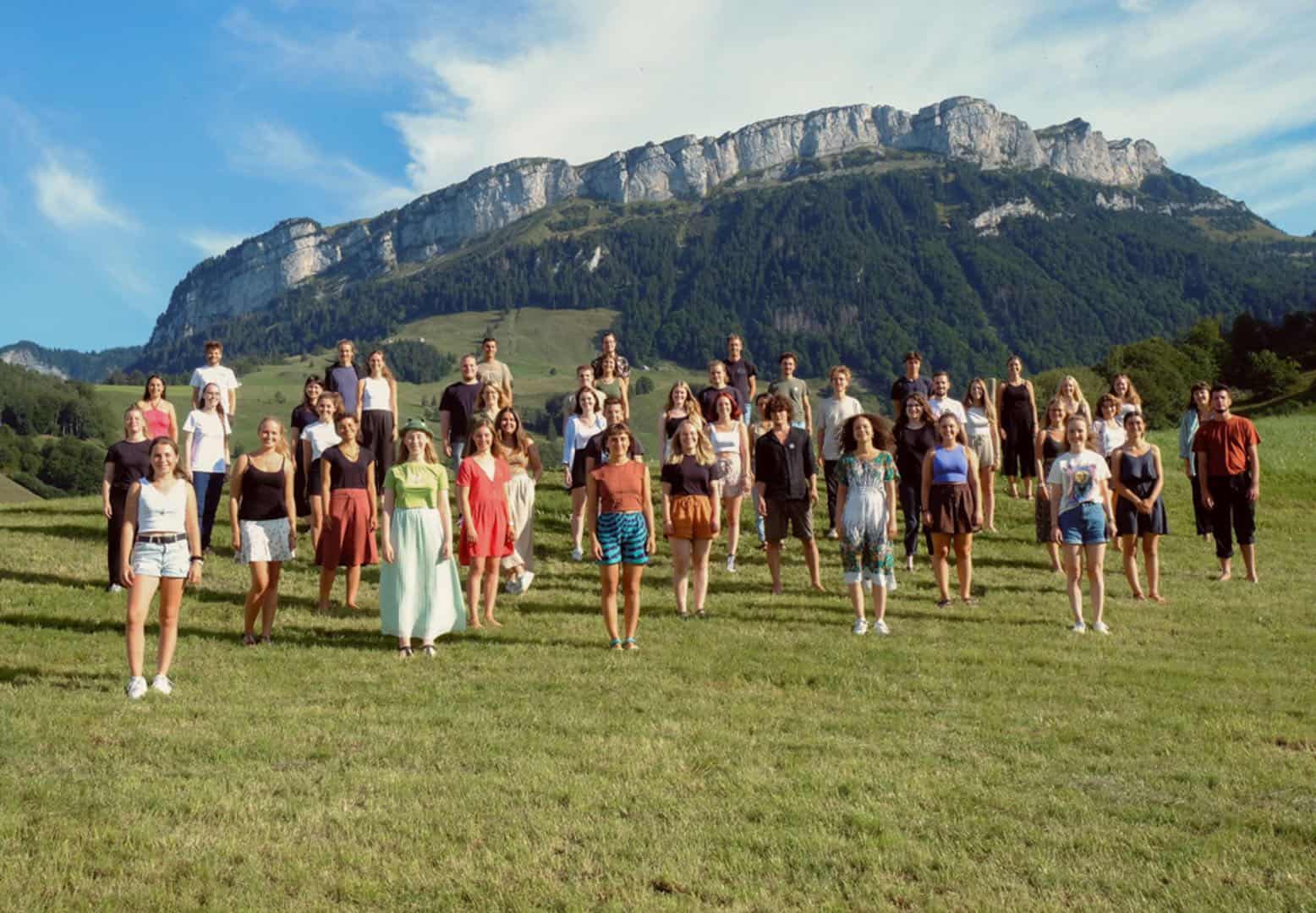
Chäserrugg
Sound engineer
Stefan Ritzenthaler, Nikolaus Matthes
Director
Meinrad Keel
Production manager
Johannes Widmer
Production
GALLUS MEDIA AG, Switzerland
Producer
J.S. Bach Foundation of St. Gallen, Switzerland
Text
Christian Friedrich Henrici (Picander)
First performance
30 August 1742, Klein-Zschocher near Leipzig

All libretti sourced from Neue Bach-Ausgabe. Johann Sebastian Bach. Neue Ausgabe sämtlicher Werke, published by the Johann-Sebastian-Bach-Institut Göttingen and the Bach-Archiv Leipzig, Series I (Cantatas), vol. 1–41, Kassel and Leipzig, 1954–2000.
All in-depth analyses by Anselm Hartinger (English translations/editing by Alice Noger-Gradon/Mary Carozza) based on the following sources: Hans-Joachim Schulze, Die Bach-Kantaten. Einführungen zu sämtlichen Kantaten Johann Sebastian Bachs, Leipzig, 2nd edition, 2007; Alfred Dürr, Johann Sebastian Bach. Die Kantaten, Kassel, 9th edition, 2009, and Martin Petzoldt, Bach-Kommentar. Die geistlichen Kantaten, Stuttgart, vol. 1, 2nd edition, 2005 and vol. 2, 1st edition, 2007.
Alle Kantatentexte stammen aus «Neue Bach-Ausgabe. Johann Sebastian Bach. Neue Ausgabe sämtlicher Werke», herausgegeben vom Johann-Sebastian-Bach-Institut Göttingen und vom Bach-Archiv Leipzig, Serie I (Kantaten), Bd. 1–41, Kassel und Leipzig, 1954–2000.
Alle einführenden Texte zu den Werken, die Texte «Vertiefte Auseinandersetzung mit dem Werk» sowie die «musikalisch-theologische Anmerkungen» wurden von Anselm Hartinger und Pfr. Niklaus Peter sowie Pfr. Karl Graf verfasst unter Bezug auf die Referenzwerke: Hans-Joachim Schulze, «Die Bach-Kantaten. Einführungen zu sämtlichen Kantaten Johann Sebastian Bachs», Leipzig, 2. Aufl. 2007; Alfred Dürr, «Johann Sebastian Bach. Die Kantaten», Kassel, 9. Aufl. 2009, und Martin Petzoldt, «Bach-Kommentar. Die geistlichen Kantaten», Stuttgart, Bd. 1, 2. Aufl. 2005 und Bd. 2, 1. Aufl. 2007.
Further study
Bach’s Cantata Burlesque BWV 212 (“Mer hahn en neue Oberkeet” – We’ve got a bran-new guvernor) was first performed on 30 August 1742 and is Bach’s last known cantata. The work was composed for the celebration of hereditary homage bestowed on Carl-Heinrich von Dieskau as the new estate holder of the village of Kleinzschocher, which at that time still lay outside the city of Leipzig. As electoral chamberlain and maître de plaisir at the Court of Dresden, Dieskau was an influential personage. And although the occasional use of dialect in the libretto obscures the situation somewhat, it was likely not the greater farmers of the village but rather the poet Picander himself who commissioned the music for his text, which was later printed as part of his “Ernst-Scherzhafften und Satyrischen Gedichte” (serious-humorous and satirical poems, volume V, Leipzig 1751). Indeed, as a tax official, Picander was in the employ of Dieskau, the district prefect responsible for taxation, which explains not only the use of tax jargon in the libretto, but also its personal character.
While the instrumental overture scored for violin, viola and continuo invokes the crude simplicity of peasant tavern music, the setting’s seven-part sequence of melodies from popular tunes (some of which are yet to be identified) actually proves to be a skilful quodlibet written in the style of the programme sonatas by Farina and Biber. The movement sets the stage for a succession of short, contrasting vocal movements that, in a dialogue between the peasant girl Mieke and her unnamed lover, include frequent allusions to the local area.
The first scene introduces both the festivities and the protagonists. With its syllabic declamations, the opening duet praises the generous squire, mocks the moralising pastor and summons the minstrels to merry music-making ere, in a burlesque setting, the seemingly virtuous Mieke rebuffs the advances of her companion by pointing out the presence of the chamberlain and his watchful eye. The chamberlain, however, is then declared to be an even greater rake himself, a play on the cliché of the gallant aristocrat that inspires Mieke, in a polonaise-like arietta, to wax lyrical on the joys of love.
The second section deals with matters of village economics and governance. In recitative number five, the lamented harshness of the local “Schösser” (taxman) is presented as a variation on the classical topos of the benevolent ruler and his tyrannical advisor. Nonetheless, coming from the pen of Picander – a taxman himself – this could have been a hidden compliment intended for the ears of Dieskau: the recent fines for fishing offences were evidence that swift action would be taken to protect the rights of the squire. The ensuing aria thus appeals with ironic aplomb for a more benevolent treatment of the peasants, and the canonic sequences of this section allude to the nominal severity of a law that is open to interpretation, thus lending the contrast between rustic delivery and ornamented music a further layer of wit.
Opening with recitative number seven, the third section combines flattering praise of the ruler with concealed reminders hinting at the limits of the peasants’ patience. Mieke’s pronouncement that “unser Herr der beste” (our master is the best) and not to be bought for all the world is elaborated in the aria “Unser trefflicher lieber Kammerherr” (This our excellent, honoured chamberlain), a series of variations over the well-known Folia bass that, set in B minor, wavers between pathos and elegy. In light of the ancestral pride of the Dieskau family, it is not impossible to interpret this use of the “Folies d’espagne” as a nod to the heroic deeds of a Dieskau forefather who served for the Spanish kings Karl and Ferdinand in the Turkish war of the 16th century, although the link – in a movement sung by the naïve Mieke – seems almost comically absurd.
The bass recitative number nine enumerates the count’s good deeds: not only is the chamberlain honest, but he also ensured that the village was protected during the most recent recruitment – and will hopefully do the same during the upcoming tax assessment. For these sentiments, Bach created a chaconnelike aria that both vaunts Dieskau’s finesse (“das ist galant” – that is gallant) and gloats over the envious neighbouring villages of Knauthain und Cospuden. Following the tongue-in-cheek references to legal tax tricks based on the false declaration of barren land (“caduke schocken” – evaded taxes), the countess is then styled as the kindly, modest friend of the village community. While that is hardly credible, there was no harm in suggesting she may have an economising influence on her noble husband; here, the “arm und grobe Holz” (poor and rough wood) of the peasant petitioners is alluded to by the use of diminished intervals. The bass aria number 12, reminiscent of a dancing bear, neatly summarises this objective: a one-off homage celebration may well cost 50 thaler – in future, however, discipline must be maintained to offset the squandered money!
After this wry exposé of the ruling classes, the two protagonists, in a fourth scene, play off the rivalry between city and country manners. Initially, Mieke wishes to show off her command of Leipzig sophistication, and Bach obliges her with a flowing aria in minuet-style that, with its graceful flute lines and delicate pizzicati, exudes considerable noblesse. Indeed, her elegant posturing is exposed only by the incongruous metaphor of the libretto: “Kleinzschocher müsse so zart und süsse wie lauter Mandelkerne sein” (Klein-Zschocher ever be sweet and tender as purest almonds to the taste). For this setting, Bach evidently reused the music of the aria “Ich will ihn hegen, ich will ihn pflegen” (I will extol him, I will attend him) from the homage cantata “Es lebe der König, der Vater im Lande” (Long life to the King now, the nation’s true father) of 1732, of which only the libretto survives.
The bass is forced to concede that Mieke’s airs and graces have not been wholly ineffectual: first he mocks her (“das ist zu klug vor dich” – That’s much too smart for thee) and puts her firmly back in her place (“wir Bauern singen nicht so leise” – We peasants sing with much more passion). But then, his own rendition of the popular melody “Es nehme zehntausend Dukaten der Kammerherr allezeit ein” (We hope now that ducats ten thousand, Our Chamberlain ev’ry day gain!), accompanied by the horn, is so bungling that Mieke, concerned for the sensibilities of the distinguished guests, gives him a thorough dressing down (das klingt zu liederlich – that sounds too uncouth). She herself then makes use of a stratagem still popular in the tabloid press of today: she professes not to say anything too embarrassing – and then proceeds to do precisely that by singing “Gib Schöne viel Söhne” (Give us, Lady, many a laddie), which echoes the familiar discourse on a noblewoman’s “virtue” by recommending that the lady finally bear an heir (“dies wünschen sich Zschocher und Knauthain fein bald” – For this boon both Zschocher and Knauthain would call!). This song inspires the bass to sing a city tune himself. For him, Bach revives the aria “Zu Tanze, zu Sprunge” (For dancing, for prancing) from the moral cantata “Der Streit zwischen Phöbus und Pan” (The Contest between Phoebus and Pan) BWV 201; while the setting gains musical brilliance from the solo violin accompaniment, the affected coloraturas bear considerable potential for irony. From our present-day standpoint, it is impossible to determine whether the intricate counterpoint and the somewhat dry flattery of the middle section allude to the aristocratic background of the countess, already once a widow, or rather to Dieskau’s accomplishments.
In the closing scene, it is high time to remove to the village tavern, the newly renovated “Grauer Wolf”. With the words “Und dass ihrs alle wisst, es ist nunmehr die Frist zu trinken” (And that ye all may know, It is now time to go for drinking) Mieke invites the guests to make a sign to order the first round, while the final recitative number 23 bids, in the sense of a lieto fine, even the notorious foes of the peasants, the taxman Picander and the notary Herr Ludwig, to join the merrymaking – a boozy act of reconciliation, considering that the two gentlemen stood to profit from the tax on drink. In the rambunctious canon of the closing duet, the work finally comes full circle: with the reference to the “Tudelsack” (bagpipes) the musicmaking is passed over to the village musicians. To fill out the sparse tutti writing in this movement, our recording features a cheerful horn part composed by Rudolf Lutz.
Show commitment
Support the Bachipedia project as a donor - for the dissemination of Bach's vocal works worldwide, in order to make the work accessible to young people in particular. Thank you very much!
Support