
Church calendar
SUpport us

(St John Passion)
No listener can be left unmoved by the bleak magnificence of the introductory chorus “Herr, unser Herrscher” (Lord, thou our master), set to the text of Psalm 8. Throbbing bass notes, streams of blood and violent blows in the middle voices as well as incessant friction in the mercilessly descending woodwinds create a soundscape that goes beyond subjective suffering and reveals a horizon of universal significance. In what is perhaps the darkest setting of devotional music in history, the composer inimitably captures the inextricable nature of death and glorification of the Saviour.
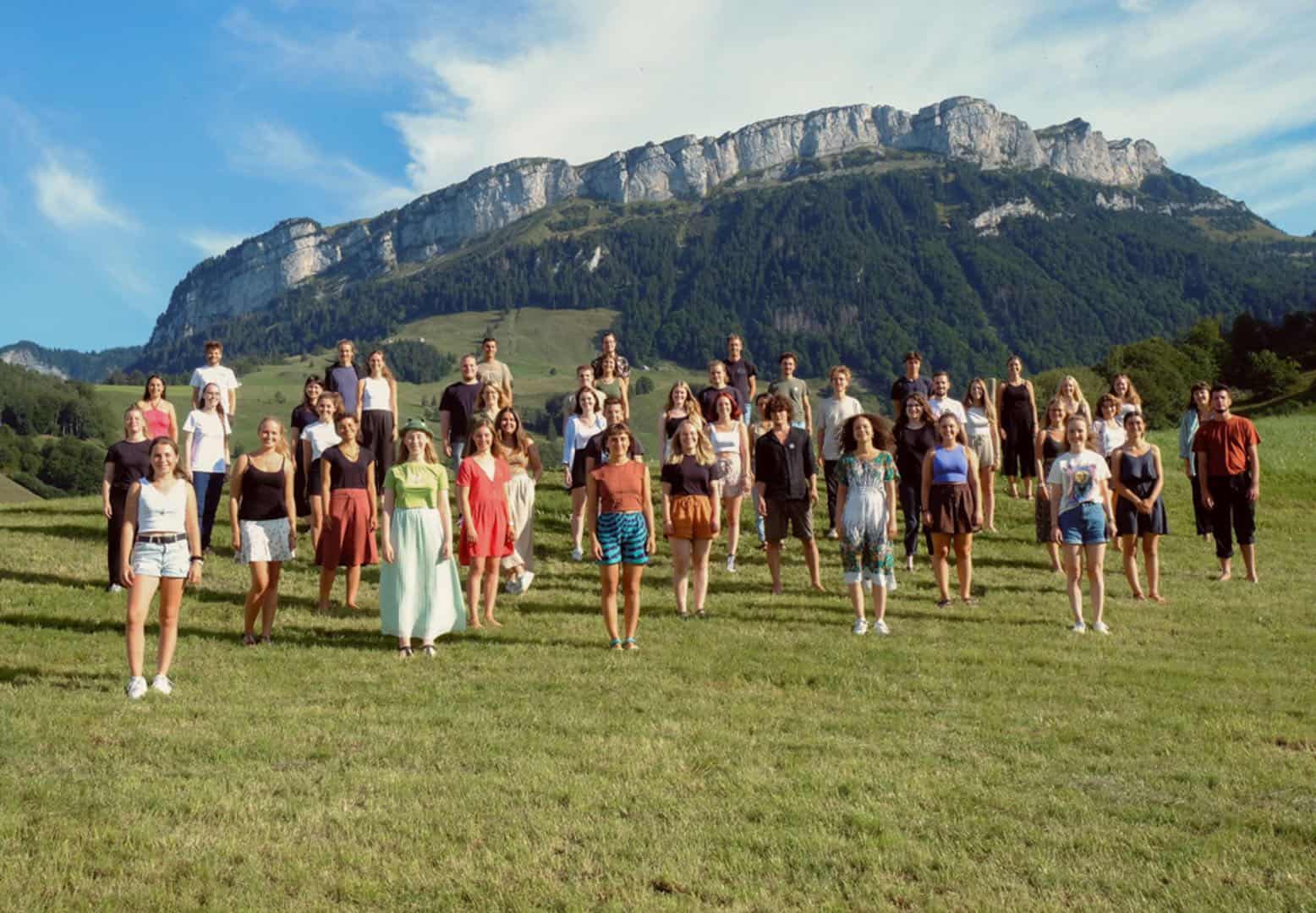
The 14th of June 2022 marked a grand day in the 16-year history of the J. S. Bach Foundation: conducted by Rudolf Lutz, our Choir and Orchestra performed Bach’s St John Passion live in the St Thomas church in Leipzig. What an extraordinary and memorable concert! The performance was broadcast live by Deutsche Welle and we are happy to make the video recording available here on Bachipedia.
The artists named on this page performed in our CD recording of the St John Passion. The artists in the St John Passion concert in Leipzig are named in the video.
(St John Passion)
No listener can be left unmoved by the bleak magnificence of the introductory chorus “Herr, unser Herrscher” (Lord, thou our master), set to the text of Psalm 8. Throbbing bass notes, streams of blood and violent blows in the middle voices as well as incessant friction in the mercilessly descending woodwinds create a soundscape that goes beyond subjective suffering and reveals a horizon of universal significance. In what is perhaps the darkest setting of devotional music in history, the composer inimitably captures the inextricable nature of death and glorification of the Saviour.
The 14th of June 2022 marked a grand day in the 16-year history of the J. S. Bach Foundation: conducted by Rudolf Lutz, our Choir and Orchestra performed Bach’s St John Passion live in the St Thomas church in Leipzig. What an extraordinary and memorable concert! The performance was broadcast live by Deutsche Welle and we are happy to make the video recording available here on Bachipedia.
The artists named on this page performed in our CD recording of the St John Passion. The artists in the St John Passion concert in Leipzig are named in the video.
Soprano
Julia Doyle
Alto
Alex Potter
Tenor
Daniel Johannsen
Bass
Matthias Helm
Soloists
Julia Doyle (Soprano)
Alex Potter (Altus)
Daniel Johannsen – Evangelist (Tenor)
Johannes Kaleschke (Tenor, Arias)
Peter Harvey – Jesus (Bass)
Matthias Helm – Pilate (Bass, Aria No. 24)
From the choir of the J. S. Bach Foundation
Guro Hjemli – Ancilla (Soprano)
Tobias Mäthger – Servus (Tenor)
Daniel Pérez – Petrus (Bass)
Soprano
Lia Andres, Guro Hjemli, Olivia Fündeling, Linda Loosli, Jennifer Ribeiro Rudin, Julia Schiwowa, Noëmi Son Nad, Noëmi Tran-Rediger
Alto
Jan Börner, Judith Flury, Antonia Frey Sutter, Katharina Jud, Liliana Lafranchi, Francisca Näf, Lea Pfister-Scherer, Alexandra Rawohl, Damaris Rickhaus
Tenor
Marcel Fässler, Manuel Gerber, Achim Glatz, Tobias Mäthger, Nicolas Savoy, Walter Siegel
Bass
Matthias Ebner, Fabrice Hayoz, Simón Millán, Valentin Parli, Daniel Pérez, Retus Pfister, Philippe Rayot
Conductor
Rudolf Lutz
Violin
Eva Borhi, Lenka Torgersen, Peter Barczi, Ildikó Sajgó, Christine Baumann, Dorothee Mühleisen, Eva Saladin, Christoph Rudolf , Karoline Echeverri, Jörn-Sebastian Kuhlmann, Catherine Plattner
Viola
Martina Bishop, Matthias Jäggi, Sarah Crown, Regula Sager
Viola d’amore
Martina Bishop, Regula Sager
Violoncello
Maya Amrein, Daniel Rosin, Jakob Valentin Duke
Viola da gamba
Gates Eketorp
Violone
Markus Bernhard, Guisella Massa
Oboe
Andreas Helm, Philipp Wagner
Oboe da caccia
Andreas Helm
Transverse flute
Tomoko Mukoyama, Sarah van Cornewal
Bassoon
Susann Landert
Harpsichord
Thomas Leininger
Organ
Nicola Cumer
Participants
Rudolf Lutz
Texts (CD-Booklet)
Anselm Hartinger, Rudolf Lutz
English translations
Alice Noger-Gradon
Recording year
2018
Recording director and editor
Stefan Ritzenthaler / GALLUS MEDIA AG, Schweiz
Recording assistant
Johannes Widmer / GALLUS MEDIA AG, Schweiz
Production
J. S. Bach-Stiftung St.Gallen, Schweiz
Composer of chorale interlude, chorale No. 11 “Wer hat dich so geschlagen”
Thomas Leininger
Co-production
Radio SRF 2 Kultur

All libretti sourced from Neue Bach-Ausgabe. Johann Sebastian Bach. Neue Ausgabe sämtlicher Werke, published by the Johann-Sebastian-Bach-Institut Göttingen and the Bach-Archiv Leipzig, Series I (Cantatas), vol. 1–41, Kassel and Leipzig, 1954–2000.
All in-depth analyses by Anselm Hartinger (English translations/editing by Alice Noger-Gradon/Mary Carozza) based on the following sources: Hans-Joachim Schulze, Die Bach-Kantaten. Einführungen zu sämtlichen Kantaten Johann Sebastian Bachs, Leipzig, 2nd edition, 2007; Alfred Dürr, Johann Sebastian Bach. Die Kantaten, Kassel, 9th edition, 2009, and Martin Petzoldt, Bach-Kommentar. Die geistlichen Kantaten, Stuttgart, vol. 1, 2nd edition, 2005 and vol. 2, 1st edition, 2007.
Alle Kantatentexte stammen aus «Neue Bach-Ausgabe. Johann Sebastian Bach. Neue Ausgabe sämtlicher Werke», herausgegeben vom Johann-Sebastian-Bach-Institut Göttingen und vom Bach-Archiv Leipzig, Serie I (Kantaten), Bd. 1–41, Kassel und Leipzig, 1954–2000.
Alle einführenden Texte zu den Werken, die Texte «Vertiefte Auseinandersetzung mit dem Werk» sowie die «musikalisch-theologische Anmerkungen» wurden von Anselm Hartinger und Pfr. Niklaus Peter sowie Pfr. Karl Graf verfasst unter Bezug auf die Referenzwerke: Hans-Joachim Schulze, «Die Bach-Kantaten. Einführungen zu sämtlichen Kantaten Johann Sebastian Bachs», Leipzig, 2. Aufl. 2007; Alfred Dürr, «Johann Sebastian Bach. Die Kantaten», Kassel, 9. Aufl. 2009, und Martin Petzoldt, «Bach-Kommentar. Die geistlichen Kantaten», Stuttgart, Bd. 1, 2. Aufl. 2005 und Bd. 2, 1. Aufl. 2007.
Anselm Hartinger, translation by Alice Noger-Gradon
“Tell me where you stand” – bach’s st john passion as a redemptive drama and soulsearching composition
“i feel there can be little doubt that the st john passion was written later, when bach was at the height of his powers. the contemporary influences seem more evident in his other passion, and there is, i believe, the sense that the composer has still to properly master the material. but people are of course bedazzled by the double choruses.” (robert schumann, 1851)
Bach’s “lesser” Passion?
While the St Matthew Passion played a central role in the 19th-century revival of Bach’s music, the St John Passion long struggled to gain recognition as a composition of equal significance; after 1800, it was not only performed less frequently but it also garnered less attention in music scholarship. This disparity in reception is well-founded: Bach’s own family and descendants presented the St Matthew Passion as Bach’s “great Passion” and thus as the composer ’s “actual” composition on the sufferings of Jesus Christ. Such scepticism towards the St John Passion has much to do with its supposedly less ambitious scoring for only one choir as well as the complexity of its choruses, which in 1886 Thomascantor Moritz Hauptmann – with a mixture of admiration and aversion – described as “barbarically vast and forbidding”.
The differences between Bach’s two surviving Passions, however, stem largely from their varying biblical texts: it is no coincidence that the symbol of the Evangelist Matthew is a man, while an eagle is used to represent John. The St Matthew Passion interprets Jesus’ suffering from the perspective of salvation through death: accompanied by radiant strings, the Christ of this composition is a patient man of sorrows already declared a saviour in his lifetime. In the St John Passion, on the other hand, Jesus is the contested son of God, whose recognition as the Messiah will determine the salvation of all humankind. Because Jesus must triumph through death and degradation, lifelike presentation takes precedence over lyrical reflection: akin to a sacred opera, the choruses, recitatives and arias of the St John Passion unsparingly expose the motives and actions of all protagonists. It is this fast-paced – nigh unbearable – vividness that distinguishes the St John Passion and makes it the preferred Passion of many choristers. Indeed, what in the 19th century was viewed as an affront to Christian simplicity and decency is today hailed as a particular virtue of the work.
Sources and versions
The surviving array of original manuscripts and performing parts bears witness to Bach’s adherence to his ingenious basic conception for the work combined with his efforts to continually adapt and modernise it. First composed in 1724, the St John Passion was Bach’s first composition for Good Friday during his Leipzig tenure, and he was still experimenting with the material as late as 1749, perhaps even 1750. In contrast to the St Matthew Passion, which Bach finalised in 1736 with a calligraphic score in his own hand, the St John Passion never attained such a definitive form. Rather, it required decades of research from Bach scholars such as Arthur Mendel and Peter Wollny to establish a chronology of the work in no less than four different versions.
Only a few performing parts survive from the first version written in 1724, but from these we can deduce that the overall musical scheme and key movements, including “Herr, unser Herrscher” (Lord, thou our master), were clear from the start. In the course of preparing the work for reperformance in 1725, however, Bach altered the St John Passion so substantially that the second version can be viewed as an essentially new composition. For instance, the introductory chorus was replaced with a concertante setting of the hymn “O Mensch, bewein dein’ Sünde groß” (O man, bewail thy sins so great), which Bach later used to close the first part of the St Matthew Passion, and three new arias were added whose dramatic yet courtly tone may well have particularly appealed to the audience. The closing movement, too, was exchanged: in this version, Bach used the chorale setting “Christe, du Lamm Gottes” (O Christ, Lamb of God thou) from BWV 23, the cantata he had submitted for his Leipzig job application in 1723.
Having spent the years after 1727 writing the St Matthew Passion and performing works of various other masters, Bach returned in 1732 to the St John Passion. In this version, he did away with many changes instated in the 1725 version and deleted the few passages drawn from the gospels of St Matthew and St Mark. In 1739, he then set out to give the disparate range of materials a clear form in a new manuscript copy. This scheme, however, was abandoned after 20 pages, perhaps in response to the sudden ban, imposed by the Leipzig city council, on the performance planned for Good Friday of that year – an incident that greatly frustrated the composer. The last version, from 1749/50, is similar in music and order of movements to the version of 1724. It is fair to assume that the changes in instrumentation (contrabassoon in the continuo, no use of violas d’amore) and the modified aria texts, revised in early Enlightenment style, constitute a response to changed audience tastes.
By nature of its complex genesis, an appreciation of the St John Passion means abandoning the ideal of a final, authorised version in favour of a plurality of possibilities. It should, however, be noted that discrepancies between the surviving source texts, the intentions of the composer and performance practice are evident. Although versions two and four are the easiest to reconstruct, it is impossible to know whether the version of 1725 (which is clearly adjusted to fit the chorale cantata cycle) or the changes to the text made in 1749, were conscious artistic statements on Bach’s part. In light of these factors, the oft maligned compilation published in the New Bach Edition may again hope to gain broader acceptance: although this mixed version was certainly never performed in Bach’s lifetime, it nonetheless unites a great measure of Bachian substance – including material from the incomplete 1739 version – and itself constitutes a documentation of Bach’s reception in the 20th and 21st centuries.
Traditions and listener expectations
A composition on the suffering and death of Jesus numbered among the loftiest – and most delicate – tasks of the baroque composer. Indeed, as late as 1847 musicologist Carl von Winterfeld advised against performing Bach’s Passions in church services, reasoning that pious choristers could not be expected to impersonate Jesus’ accusers – a particularly prominent role in the St John Passion. In the Lutheran view, the purpose of devotional music was to inspire the hearts and minds of congregations to repentance and deeper understanding of God’s act of redemption. At the same time, however, all too drastic depictions were to be avoided – Bach and other cantors were explicitly warned in their employment contracts against all too naturalistic presentations.
Following the Reformation, church music was largely dominated by musical forms based on early church declamation of the Gospels; multivoice settings were only favoured in the depiction of group scenes. After 1700, however, secular musical forms and freely versified texts began to permeate church music – much to the delight of a younger generation of composers associated with Telemann, Handel, Keiser and Stölzel. As such, biblical accounts were increasingly replaced by oratorios made up of recitatives and arias that brought into play the powerful imagery of baroque poetry. Texts such as Christian Friedrich Hunold’s “Blutiger und sterbender Jesus” (bleeding and dying Jesus) of 1704 and the Passion published in 1712 by Barthold Hinrich Brockes, a member of the Hamburg Senate with a literary bent, no doubt caused a sensation made up of equal parts fascination and repulsion. It can be assumed that 18th century congregations reacted much more directly and physically to music than today’s concertgoers, just as the preachers of the baroque castigated the transgressions of their fellow humans with greater zeal than their politically correct successors. A church service for the Passion in Bach’s time should be understood as a multi-hour cathartic experience in which music played an indispensable role. In this sense, as pointed out by Bach enthusiast Meinrad Walter, Good Friday represented both the liturgical and musical zenith of the church year.
Textual levels and creation of affect
The mastery Bach and his librettist displayed in the first Passion oratorio of the composer’s Leipzig tenure is proportionate to the magnitude of the task. Bach’s knowledge of the Bible was exceptional, so the fact that the Gospel narrative was, in essence, to remain unaltered may have simplified his work, yet it was also a concession to the audience, for whom the format was new – in theologically conservative Leipzig, the performance of a Passion oratorio was still an almost unheard-of innovation. After a first performance in 1717 of Telemann’s Brockespassion in the Neukirche church, it was not until 1721 that Kuhnau, the aging Thomascantor, conducted a St Mark Passion in the Good Friday Vesper service at the Thomaskirche. Bach himself was to discover how tenuous this new tradition was – when composing the St John Passion in 1724, he assumed that the music would be performed in the Thomaskirche. His superiors, however, insisted that the work be presented in Sankt Nikolai, the city’s other main church. This brought Bach both a reprimand and the trouble of the reprinting of the text materials, for which he was not reimbursed until later.
No listener can be left unmoved by the bleak magnificence of the introductory chorus “Herr, unser Herrscher” (Lord, thou our master), set to the text of Psalm 8. Throbbing bass notes, streams of blood and violent blows in the middle voices as well as incessant friction in the mercilessly descending woodwinds create a soundscape that goes beyond subjective suffering and reveals a horizon of universal significance. In what is perhaps the darkest setting of devotional music in history, the composer inimitably captures the inextricable nature of death and glorification of the Saviour. The movement’s outer and middle sections are necessarily related: even the “größte Niedrigkeit” (deepest woe) cannot strip the kingly majesty from the tortured Christ, whose realm is of another dimension. As demonstrated recently by Eric Chafe, this introductory movement alone reveals Bach’s deep understanding of the Johannine conception of Christ and its theological-interpretative tradition.
Bach sustains this stylistic excellence by taking advantage of all textual levels of the libretto. While the actual Gospel narrative is related in an exchange of recitatives between the Evangelist, Jesus and the remaining figures, the mass choruses – which are longer in comparison to those of Bach’s contemporaries – bring the biblical story tangibly to life with their dense fugal style and emotionally charged gestures. Indeed, nothing could more strikingly illustrate the disciples’ disorientation after the condemnation of their master than the distraught cries of “Wohin?” (Where to?) in the aria “Eilt, ihr angefochtnen Seelen” (Haste, ye, O sorely tempted spirits). And even the soldiers’ drawing of lots for the cloak of the crucified Jesus is captured in a picturesque movement with obbligato bassoon; the surprising length of this setting reflects the importance attributed by Baroque interpreters to the fulfilment of this prophecy.
The succession of symmetrically related choruses at the beginning of the second part has always been an object of study for interpreters of this work. In line with the efforts of early Christians to distance themselves from their Jewish origins (as evidenced in the Gospel of St John) these verses depict the struggle to decide the fate of Christ: the hypocritical priests and frenzied crowd battle to win the unwilling Pontius Pilate to their side – indeed, the topicality of Bach’s portrayal of the escalating violence is terrifying. Still: the methodical unravelling of events as well as the tonal scheme chosen makes all too clear that even the hate-filled scorners are but mere players in a divine act of salvation. Accordingly, the chorale “Durch dein Gefängnis, Gottes Sohn” (Through this thy prison, Son of God), provides for an introspective moment of respite, amid the clamour of the crowd, in which the Christian community expresses itself in a way that helped the audience identify with their feelings of blame, abandonment and trust. Indeed, Bach’s beautiful chorale verses are not only contemplative interludes that mark the end of each stage of the narrative but are also a response to the scandalous events. For instance, the two-verse “Wer hat dich so geschlagen” (Who hath thee now so stricken) is exemplary in its demonstration of how protest can engender self-knowledge and penance. And the chorale “Petrus, der nicht denkt zurück” (Peter, when he fails to think), which closes the first part, not only responds to Peter’s denial, but also provides a transition to the sermon that would have followed in Bach’s time. Although Bach removed the original closing chorale of “Ach Herr, laß dein lieb Engelein” (Ah Lord, let thine own angels dear) from the 1725 and 1732 versions, he later reinstated it in the 1749/50 version. Bearing in mind that this setting speaks with vision of one’s own mortality and the hope of resurrection, it is a touching thought that Bach made this change so shortly before his own death.
A further textual level is embodied in the arias interspersed throughout the Passion events. In the arias, Bach explores the full spectrum of human emotions: from burning remorse (“Ach mein Sinn”) and loyal confidence (“Ich folge dir gleichfalls”) to exemplary sympathy (“Erwäge”) and und still grief (“Zerfließe, mein Herze”). Movements such as the arioso “Betrachte, meine Seel” (Observe now, O my soul), whose instrumentation was changed many times, belong to the most moving compositions of meditative music. As in a baroque still-life painting, Bach melds the distinctive timbres of flutes, low oboes, lutes and gambas as well as the viola d’amore, which owes its silvery tonal colour to the additional resonance strings. Bach also employs the full array of tropes and musical-theological codes common in the day, while nevertheless lending each of these symbolic figures its own distinctive quality. His protagonists are no static altar figures assembled around the cross, but complex humans of their time as well as our own.
The succession of three arias and an arioso that follow the actual crucifixion of Jesus is particularly devastating in effect. As though the observers had only now perceived the enormity of the event, a dimension of deepest sorrow and empathy breaking with all convention comes into being. With a tempo indication of molto adagio, Bach presents a lament for alto soloist and viola da gamba that repeats the final words of Jesus and seems to fall mute in sublime pain. Even the stirring middle section “Der Held aus Juda siegt mit Macht” (The man of Judah wins with might) does not culminate in liberated rejoicing but oppressive silence. The following movement, “Mein teurer Heiland” (My precious Saviour), is initially somewhat stilted but gradually takes on an enraptured dimension through the interpolated chorale “Jesu, der du warest tot” (Jesus, thou who suffered death), helping to assuage fears of death. Following the description of the geological events at Jesus’ death in the recitative, the scene of struggle between despair and hope is ultimately transferred to the heart of the believer. As such, the aria “Zerfließe, mein Herze” (O melt now, my bosom) develops into the empathic climax of the Passion – fragile woodwind lines underscore the boundless pain of the soprano who, when the accompaniment falls silent, seems to lose all ground beneath her feet. The message sung into the void “Dein Jesus ist tot!” (Thy Jesus is dead!) conjures an image of the world as a desert after the beloved Christ has died – in this aria Bach grants a glimpse into his soul, which at the same time leads us to our own Calvary as the place of our deepest fears and doubts.
The response of Bach’s audiences to the St John Passion is not documented. Nevertheless, it is all but certain that Bach’s masterful composition could never have attained its level of affect had its maker not been well acquainted with “the old Adam” in himself. According to Martin Luther, the founder of the music tradition based on the gospel texts and a lifelong admirer of the book of St John, man is simul justus et peccator – both a righteous sufferer and poor sinner, and thus capable of the best and worst deeds. There is hardly another composition in the history of music that impresses this upon us so powerfully as the St John Passion of Johann Sebastian Bach.
“the numerous examples of bach himself repeatedly changing his compositions teach us that there is sometimes no such thing as the perfect interpretation.” (arthur mendel, 1974)
Show commitment
Support the Bachipedia project as a donor - for the dissemination of Bach's vocal works worldwide, in order to make the work accessible to young people in particular. Thank you very much!
Support